


























Scrolling Beats Sex for 1 in 8 Gen Z — What That Stat Actually Says About Arousal

What the stat actually says
A wave of 2026 reporting — Newsweek, Vice, SXSW panels, multiple wellness publications — keeps citing the same handful of survey points: about 24% of Gen Z respondents say they haven't had sex in the past year (roughly double the millennial rate at the same age in 2010), around 37% of single young adults aren't currently sexually active, and the headline that keeps going viral, about 1 in 8 saying scrolling is more pleasurable than sex. Surveys vary in method and population, but the direction is consistent across them.
What's missing from most of the coverage is the mechanism. The numbers are framed as a moral story — Gen Z is anxious, hyperconnected, too online, too cautious. That's downstream. The actual thing happening is older than smartphones and simpler than generational analysis: attention and arousal share the same circuit, and they compete for it.
The dopamine circuit, plainly
Dopamine is not the "pleasure chemical" — that's a pop-science oversimplification. It's the wanting chemical. It rises in anticipation of a reward, not when the reward arrives. Sexual arousal is one of the strongest natural dopamine spikes a healthy adult body produces. So is the variable-reward loop a social-media feed runs on: pull-to-refresh, scroll, next post, maybe-interesting-maybe-not, tap, repeat.
Both circuits run through the same brain regions — ventral tegmental area, nucleus accumbens, prefrontal cortex. Researchers studying problem gambling have known for decades that a dopamine system overtrained by frequent low-cost rewards becomes less responsive to high-cost ones. The technical name is reward devaluation. The everyday version: if your circuit has been receiving 400 small hits a day from a feed, the larger, slower hit of arousal has to compete against a system that's already partly numb.
Crucially, this is not unique to Gen Z. The same mechanism affects anyone whose phone use is heavy and habitual, regardless of generation. Gen Z is just the cohort whose entire adult life has been inside it.
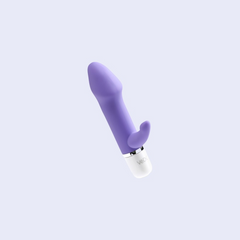
 Femmefunn Ultra Bullet Mini Massager
Three inches, eight patterns, and one button — a bullet is the lowest-friction toy to keep on the nightstand instead of the phone.
View product →
Femmefunn Ultra Bullet Mini Massager
Three inches, eight patterns, and one button — a bullet is the lowest-friction toy to keep on the nightstand instead of the phone.
View product →
Why "phones are bad" misses it
The intuitive read — phones bad, put them down, libido returns — gets the direction right and the magnitude wrong. The mechanism isn't moral failure or attention deficit. It's that a body which has been getting frequent, low-friction dopamine all day is bad at recognizing arousal cues that are slow, embodied, and require ten minutes of doing-nothing-else to land.
The classic example: most adults can identify, within seconds, that a notification has arrived. The same adults, in clinical studies of interoceptive awareness, often need 60 to 90 seconds to accurately notice that their own body has become aroused. The signal-to-noise ratio matters. Phones are loud, persistent, and instantly rewarding. Sexual arousal is quiet, builds slowly, and gives you no points for noticing it.
This is not a generational defect. It's a perceptual one — and it is reversible.
What attention restoration actually looks like
The fix the wellness corner of the internet keeps pointing at — dopamine fasts, hard digital detoxes, deleting Instagram — works for some people and bounces off most. The more honest version is smaller, more boring, and more consistent. The research on attention restoration is unambiguous on this: the variable that matters is not the duration of the break, it's the frequency of small breaks where your nervous system runs the slow-attention software.
What this looks like for arousal, specifically:
- One phone-free window in the evening. Not "phone in another room while we watch TV" — phone in another room, no second screen. The window can be short. Twenty minutes is enough to start.
- Touch before anything else. Not foreplay — just touch. A hand on a back, a head on a shoulder, no progression implied. The dopamine system gets quiet enough for the slower signal to come through.
- Solo cues that aren't screens. If your relationship with arousal runs entirely through visual media, the body forgets it has its own cues. A toy, a candle, a warm bath, a single song — anything tactile and slow — re-teaches the circuit.
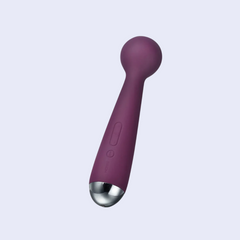
 LELO AKO Originals Clitoral Massager
Quiet, palm-sized, and intentionally analog — for the reader whose 'I'll just check my phone first' has become a five-year habit.
View product →
LELO AKO Originals Clitoral Massager
Quiet, palm-sized, and intentionally analog — for the reader whose 'I'll just check my phone first' has become a five-year habit.
View product →
The other half: it's not only about phones
Treating the sex recession as a screen-time story is half a story. The same generation is also more likely to be on antidepressants (over a third of Gen Z reports being on prescription mental-health medication, and SSRIs commonly lower libido), more likely to live with parents into their late twenties, and socializing about seven fewer hours per week than peers fifteen years ago. Less proximity, less spontaneity, more medication, more anxiety. Phones are one of several inputs.
For the SSRI-libido piece specifically, the letter on SSRIs and desire covers the medication side honestly. For the stress-and-arousal mechanics, the stress-killed-your-sex-drive piece goes deeper on the cortisol angle. And for the practical phone side — the closest companion to this post — the recent phone-free dates piece is worth a read.
What this stat is not
It is not evidence that Gen Z is broken, that previous generations were healthier, or that phones are the reason civilization ends. It's a useful piece of data about how attention shapes embodied experience. The same data point would have shown up in any cohort whose dopamine system ran the same training program — it just happens that Gen Z is the first one that did.
The takeaway isn't to throw the phone out. It's to notice that arousal is a slow signal in a fast environment, and that the only thing that brings it back online is more practice running the slow software.
Bullet Vibrators | Discreet & Powerful Clitoral Stimulators Small, focused, tactile — bullet vibrators are the opposite of screen-numbness. Pocket-sized, intense where it counts, and the easiest way to remind your nervous system that touch hits differently than dopamine. Shop category →FAQ: scrolling, dopamine, and the sex-recession discourse
Is the "1 in 8 prefer scrolling to sex" stat really true?
The number has shown up consistently in 2026 surveys of Gen Z and young millennials, with sample sizes in the low thousands. Different surveys produce slightly different versions of the same finding — 12% to 15% in various polls. The direction is robust; the precise number depends on methodology.
Why do attention and arousal compete?
They both run through the same dopamine pathway — the ventral tegmental area into the nucleus accumbens and prefrontal cortex. A system that has been receiving frequent small rewards is, in clinical terms, partly reward-devalued, which means slower, bigger rewards like sexual arousal have to compete against a circuit that is already partly numb to anticipation.
Does that mean phones cause low libido?
Not directly. Phones contribute to a perceptual environment where slow embodied cues are harder to notice. Combined with other inputs — antidepressants, less in-person socializing, more anxiety — heavy phone use is one of several factors, not the cause.
What is the smallest useful change?
A 20-minute phone-free window in the evening, with no second screen, is enough to start. Research on attention restoration is consistent: frequency of small breaks matters more than the length of any single one.
Is this a Gen Z problem specifically?
No. The mechanism affects any adult with heavy, habitual phone use. Gen Z is the cohort whose adult life began inside it, which is why the stats are sharpest there — not because they're broken.
What do toys have to do with attention?
Tactile, single-purpose objects re-teach the body that arousal cues are slow and embodied. A toy is a deliberate signal to the nervous system that the current activity is not a feed — the cue itself is part of the work.