






















"Boysober" Is the 2026 Trend — What "Sober from Men" Actually Means

What is "boysober," and where did it come from?
The term was coined in 2024 by Brooklyn comedian Hope Woodard as a 30-day challenge to step away from dating, hookups, and male-validation-seeking entirely. It took off on TikTok and crossed into mainstream coverage by 2025. By spring 2026 the hashtag has roughly 19.8 million views, and the framework has split into roughly three flavors: 30-day cold-turkey, 6-month deeper reset, and a flexible "year of myself" annual version.
The trend is overwhelmingly framed by women — particularly Gen Z and younger millennials — but the underlying behavior (a self-declared dating pause to reset) shows up across genders and orientations under different names: "monk mode," "dating cleanse," "intentional single year." The naming is generational; the move isn't.
How is boysober different from celibacy?
Three things separate them:
- Goal. Celibacy is typically faith-based, identity-based, or moral; boysober is logistical and time-bounded. The point isn't virtue — it's reclaiming attention.
- Sex policy. Many boysober protocols permit solo sex (and some permit any sex that doesn't carry romantic weight). Celibacy traditionally rules out both.
- Endpoint. Celibacy is open-ended; boysober has an explicit return date. The exit is the feature, not the failure.
The cultural distance from celibacy is intentional. Boysober explicitly rejects the older framing that women are "more lovable or respectable" when not having sex — it's positioned as self-investment, not self-denial.
For Her: Explore La Pepa's Sex Toy Collection for Women If 'boysober' is the framework, a small solo-pleasure upgrade is the practical next step — the category that makes the break enjoyable, not just principled. Shop category →Why is boysober trending now?
Three pressures converged. First, dating-app fatigue is at an all-time high — surveys put the share of US under-35s who say apps have made dating worse at roughly 60–70%, depending on the year and platform. Second, "main character" and "soft life" content normalized prioritizing your own attention. Third, post-2024 economic and social anxiety made the cost-benefit of low-commitment dating look worse: the time spent versus the actual outcomes finally pushed enough people to walk away on purpose.
The trend also overlaps with the broader 2026 wellness pivot — the digital-detox dating wave, the soft-life intimacy push, and the quiet return of unhurried touch are all cousins. Boysober is the dating-side version of the same impulse.
The rules people actually follow
There's no governing body. The most common 30-day version reads roughly like this:
- Delete the apps. Not "stop opening" — actually delete. The friction matters.
- No flirting, no situationships, no "we'll see what happens." Includes texting an ex, the maybe-someday-coworker, and the friend you've been ignoring the tension with.
- Solo sex is fine. Almost every version explicitly permits this. The point isn't denial of pleasure; the point is denial of the romantic-attention loop.
- Replace the time, don't just remove it. Hobby, friend, gym, project, sleep. The most common reason people "fail" a boysober month is leaving the freed-up hours unfilled.
- Set an exit date and write it down. Open-ended doesn't work. Day 31 is the calendar reset.
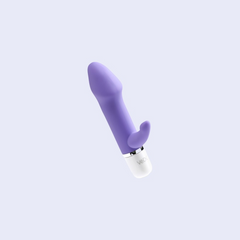
 Blush Novelties Purity G Mini G-Spot Vibrator
A compact G-spot vibrator under $30 — small enough to introduce without ceremony, powerful enough to make solo nights feel intentional.
View product →
Blush Novelties Purity G Mini G-Spot Vibrator
A compact G-spot vibrator under $30 — small enough to introduce without ceremony, powerful enough to make solo nights feel intentional.
View product →
What changes during a 30-day boysober reset
Self-reported outcomes from the largest TikTok-comment threads and a handful of qualitative pieces converge on three patterns:
Time appears. Most people are surprised by how much time dating-app maintenance, situationship texting, and "should I or shouldn't I" rumination quietly consume. Estimates from app-usage trackers put the median single user at 8–11 hours a week on dating-related activity. Reclaim that and a hobby actually becomes possible.
The "validation cycle" loosens. The first 7–10 days are the hardest because the dopamine pattern of match-and-message is genuinely a pattern. By week 3 it usually breaks. Self-reports of mood improvement around weeks 3–4 are consistent across coverage.
Standards reset. Roughly 70% of people doing the 30-day version report changing what they're looking for after the reset — usually toward longer-runway, slower-paced dynamics and away from the swipe-and-meet rotation.
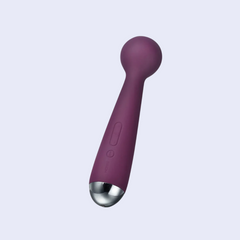
 Desire Mantra Coral Dual Motor Vibrator
A dual-motor vibrator under $50 — broader stimulation for the season when you're prioritizing your own attention over anyone else's.
View product →
Desire Mantra Coral Dual Motor Vibrator
A dual-motor vibrator under $50 — broader stimulation for the season when you're prioritizing your own attention over anyone else's.
View product →
What boysober is not
It's not "I hate men." Most coverage and most participants explicitly distance themselves from that framing. It's not a permanent state — the exit is the design feature. It's also not a virtue ranking; people who don't do it aren't doing dating wrong, they're just not in the same season. And it's not a cure-all: the underlying patterns (rushed attachment, validation-seeking, dating-app burnout) come back if the freed-up time goes back to the same loops on day 31.
FAQ: Boysober questions, answered
Where did the word actually come from?
From Brooklyn comedian Hope Woodard, who launched the term as a 30-day personal challenge in 2024. The framework went viral on TikTok and is now sitting around 19.8 million views on the hashtag in 2026.
Is boysober the same as celibacy?
No. Celibacy is typically open-ended, often faith-based, and rules out solo sex. Boysober is time-bounded, secular, and almost always permits solo pleasure. The point is reclaiming attention, not denying the body.
Can men do boysober?
The behavior shows up across genders — usually called "monk mode," "dating cleanse," or "intentional single year" instead. Same underlying pattern; different naming.
What's the right length — 30 days, 6 months, a year?
30 days is enough to break the dopamine cycle and feel a clear shift; 90 days is the most common "I want a real reset" version; 6–12 months is for people doing deeper post-relationship recovery work. Start with 30 unless you have a specific reason for longer.
How do I know I'm doing it for the right reason?
If the answer to "why" is "to reclaim my time and attention," it's likely to work. If the answer is "to make him miss me" or "to prove I don't need anyone," it usually backfires — those are external-validation goals dressed up.
The takeaway
Boysober is the 2026 trend version of an older idea: the deliberate dating pause. The strongest versions are short, scheduled, well-replaced (with hobbies, sleep, friends, and yes — solo pleasure), and fundamentally about attention, not abstinence. Done well, you exit on day 31 with the same body, more time, and a clearer read on what you actually want next.