
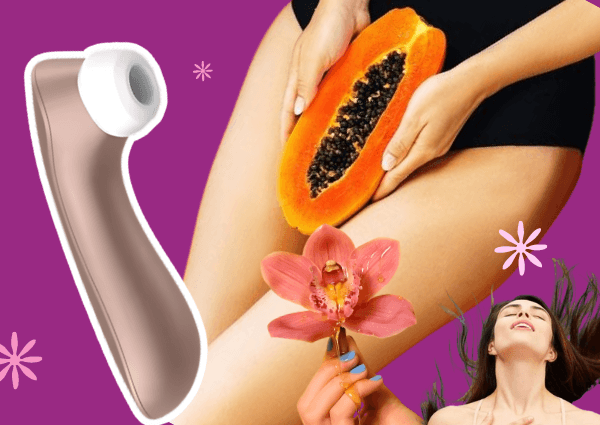
What is an air-pulse clitoral stimulator — and how does it work?
Air-pulse stimulators hit the market around 2014 (Womanizer was the first), and a decade later they're the fastest-growing category in sex toys for a reason. This guide explains what they actually do differently, why that matters for a lot of bodies, how to use one, and what to look for if you're buying your first.
What an air-pulse clitoral stimulator actually is
An air-pulse stimulator is a handheld device with a soft silicone tip that forms a light seal around the clitoris. Inside the tip, a small internal motor moves a diaphragm back and forth to pump rhythmic pressure waves through the sealed chamber. The clitoris feels a gentle, pulsing suction-and-release — not a vibration.
Key features across almost every model:
- A contoured, soft silicone nozzle sized to fit around the clitoral glans
- Multiple intensity levels (typically 5–12), selectable via plus/minus buttons
- Sometimes multiple patterns — steady pulse, escalating pulse, wave-style rhythms
- Rechargeable battery, usually 30–90 minutes per charge
- Waterproof rating (IPX7) on most models, so they're bath- and shower-safe
- Quiet operation — most run around 45–55 dB, quieter than normal conversation
How it works: the physics without the marketing copy
Traditional vibrators stimulate by pressing a vibrating surface directly against the nerves of the clitoris — that's physical contact plus rapid micro-movement. Air-pulse toys do something categorically different: they create a sealed air chamber around (not touching) the clitoris and pump pressure waves through that chamber.
Those pressure pulses produce four effects on the clitoral tissue:
- Rhythmic pressure differential. The clitoris is briefly drawn slightly upward with each pulse, then released. The motion is small — millimeters — but fast.
- Increased blood flow to the clitoris and the internal structures around it, much like the erection response in male tissue.
- Deep-nerve stimulation. Because the stimulation comes through pressure rather than direct friction, it reaches nerve endings that sit deeper under the skin — not just the ones on the surface.
- No direct contact fatigue. The clitoris can become desensitized with extended direct contact from a vibrator. Air-pulse stimulation avoids that desensitization because nothing is actually touching the nerves.
The net effect: for many people, it's the first time a toy produces orgasms that feel noticeably different from a vibrator — deeper, more full-body, and often faster.
Why so many people have better results with air-pulse than with vibrators
A few reasons this category has exploded so fast:
- Faster time-to-orgasm. User surveys from several major toy brands consistently put average time-to-orgasm with air-pulse stimulators at 2–5 minutes — noticeably faster than with traditional vibrators.
- Works for people who "can't orgasm from toys." A significant fraction of users who never consistently reached climax with vibrators do with air-pulse. The non-contact mechanism bypasses the surface-nerve fatigue that causes the "numb" feeling some people get from strong vibrators.
- Multi-orgasm. Because the clitoris stays sensitive, many users can reach a second or third orgasm within the same session — often harder to do with pure vibration.
- Strong external-only category. Some people prefer not to use internal toys; air-pulse is exclusively external.
How to use an air-pulse stimulator step by step
- Start warm, not cold. Light foreplay, self-touch, or a few minutes of a gentler vibration wakes up the clitoris. Air-pulse works best on a clitoris that's already engaged.
- Apply a small amount of water-based lube to both the nozzle and the clitoris. Lube is not optional — it helps the seal form and avoids any rubbing.
- Find the seal, not the pressure. Place the nozzle gently around the clitoris (not on it) and let it settle. The seal forms with light contact — you don't need to press hard.
- Start at the lowest intensity. Most people find level 1 or 2 already stronger than expected. Work up from there.
- Experiment with angle and position. Tilting the toy slightly or shifting a few millimeters often changes the sensation noticeably. Small adjustments matter.
- Ride the pulse rhythm instead of adding motion. Unlike a vibrator, you don't need to move the toy. The pulses do the work; you just hold it in place.

What to look for when buying your first one
Prices range from ~$35 to ~$200. The cheap ones (under $30) almost always cut corners on the motor, seal, and battery — skip them. Above $200 you're paying for design, app control, and brand. The sweet spot for a first toy is $45–$80.
Specs that actually matter:
- At least 5 intensity levels. More is fine; fewer is limiting.
- IPX7 waterproof so you can use it in the shower and clean it fully.
- USB-C charging. Older micro-USB is a mild deal-breaker in 2026 — cables get lost, standards move on.
- Medical-grade silicone nozzle. Softer silicone seals better than firmer TPE.
- Multiple nozzle sizes are a nice bonus — clitoral anatomy varies widely, and the right nozzle size affects how good the seal feels.
- Travel-lock mode if you'll ever travel with it. See our travel guide for sex toys for why this matters.
Using it with a partner
Air-pulse stimulators work just as well in partnered sex as solo — often better, because your partner can focus on anything else while the toy handles external stimulation.
- During oral sex: rare but striking pairing — some people love it, some find it too much. Worth trying gently.
- During penetration: hold the stimulator against the clitoris in positions that allow it (missionary with a slight lift, cowgirl, spooning). The combination of internal penetration + external air-pulse is the most-recommended way to reach a blended orgasm.
- Hands-free variations: some models have wearable or shaped versions that stay in place during sex.
If you and your partner are new to introducing toys together, our guide to bringing up sex toys with your partner covers the conversation upstream of the purchase.
Cleaning and care
- Wash after every use. Warm water, mild soap or a dedicated toy cleaner, paying attention to the inside of the nozzle where lube and natural fluids collect.
- Dry the nozzle interior by gently pressing a soft cloth into it. Don't insert anything hard — you can damage the diaphragm.
- Never fully submerge the charging port — even on IPX7 toys, repeated submersion around the port shortens lifespan.
- Charge it every 2–3 months if idle. Fully discharged lithium batteries degrade faster.
Our complete cleaning guide for vibrators applies to air-pulse toys too — the only extra step is paying attention to the inside of the nozzle.
FAQ: air-pulse clitoral stimulators
Is an air-pulse stimulator the same as a "clitoral suction toy"?
Yes — the terms are used interchangeably, though "air-pulse" or "pressure-wave" is more accurate. The toy isn't actually sucking; it's pushing and pulling air pressure in a chamber around the clitoris.
Does it feel like oral sex?
Often yes — that's the closest existing experience most people can map it to. It's not identical, but the non-contact, rhythmic, engulfing sensation is what drove the initial marketing comparison.
Will it work for me if I can't orgasm from a regular vibrator?
There's a high chance it will. Many people who struggle with vibrators find air-pulse stimulators work the first time they try one. It's not universal — some bodies prefer strong direct vibration — but air-pulse is the #1 alternative to recommend when traditional vibrators aren't clicking.
Can I use it internally too?
No — air-pulse stimulators are strictly external. Inserting one would break the pressure chamber and could damage the motor. Many newer models combine an external air-pulse head with an internal vibrating arm in a single toy, though, if you want both in one device.
Is it safe to use every day?
Yes, for most people. Because the stimulation is non-contact, the clitoris doesn't get desensitized the way it can with heavy daily vibrator use. If you notice reduced sensitivity, take a few days off — your baseline comes back quickly.
How long does the battery last?
Most models run 30–60 minutes on a full charge; a few premium ones get 90+ minutes. A full charge takes 1.5–3 hours from a standard USB port.




%20is%20a%20different%20category%20from%20a%20vibrator.%20Instead%20of%20pressing%20a%20vibrating%20surface%20a...)